
What is Compression Set?
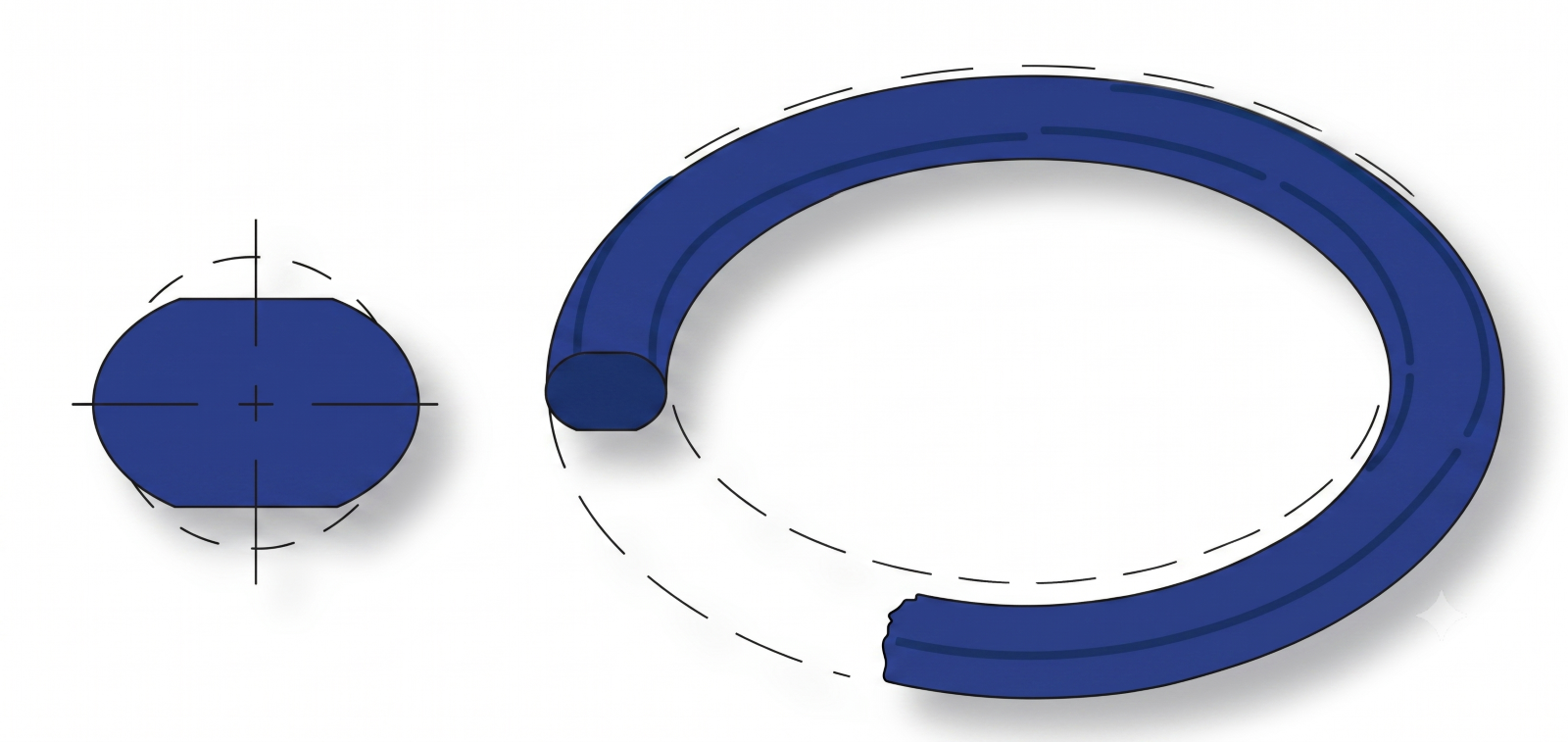
Compression set occurs when an elastomer undergoes permanent deformation and fails to fully recover its original shape after being subjected to prolonged compression. In sealing applications, this loss of elasticity can significantly reduce sealing performance and increase the risk of leakage.
A common example is an O-ring that remains flattened after extended service. As the material loses its ability to rebound, the sealing force decreases, making compression set one of the leading causes of O-ring failure. Understanding what causes compression set and how to minimise it is essential when selecting seals for long-term reliability.
How is Compression Set Measured?
Compression set is a measure of an elastomer's ability to recover after being compressed for a specified period of time. It is commonly evaluated using the ASTM D395 testing standard, which measures the permanent deformation that remains after the compressive load has been removed.
During testing, the elastomer is compressed by a specified percentage, typically 25% of its original thickness for a defined period and temperature. Once the load is removed, the material is allowed to recover before its final thickness is measured.
The result is expressed as the percentage of the original deformation that has not recovered. Lower compression set values indicate better elastic recovery and generally provide improved long-term sealing performance.
Compression Set Formula for O-rings
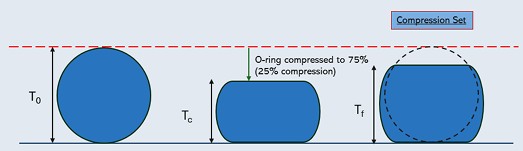
Compression Set (%) = ((T₀ − Tᶠ) / (T₀ − Tc)) × 100
Where:
- T₀ = Original O-ring cross-sectional thickness
- Tᶠ = Final thickness after testing
- Tc = Thickness under compression
Causes of Compression Set
Compression set can develop due to several factors, often acting together over time. Common causes include:
Inadequate Heat Resistance
Exposure to elevated temperatures can accelerate the breakdown of elastomer properties, reducing the material's ability to recover after compression. Selecting high-temperature materials such as FKM (Viton®) or silicone can help maintain elasticity in demanding environments.
Poor Compression Set Performance
Different elastomers exhibit varying resistance to permanent deformation. Materials with naturally lower compression set characteristics, such as EPDM and FKM, are often preferred for applications requiring long service life.
Excessive O-ring Squeeze
Applying too much compression during installation places additional stress on the elastomer and can accelerate permanent deformation. Recommended squeeze levels are typically:
- Static seals: 15–30%
- Dynamic seals: 8–16%
Following established gland design guidelines helps optimise sealing performance while minimising compression set.
Chemical Degradation
Exposure to incompatible chemicals can alter the molecular structure of an elastomer, leading to hardening, softening, swelling, or permanent deformation. Ensuring material compatibility with the media being sealed is essential for long-term reliability.
Factors Affecting Compression Set
Shore Hardness (ShA)
Shore hardness influences how readily an elastomer deforms under load. Softer materials, such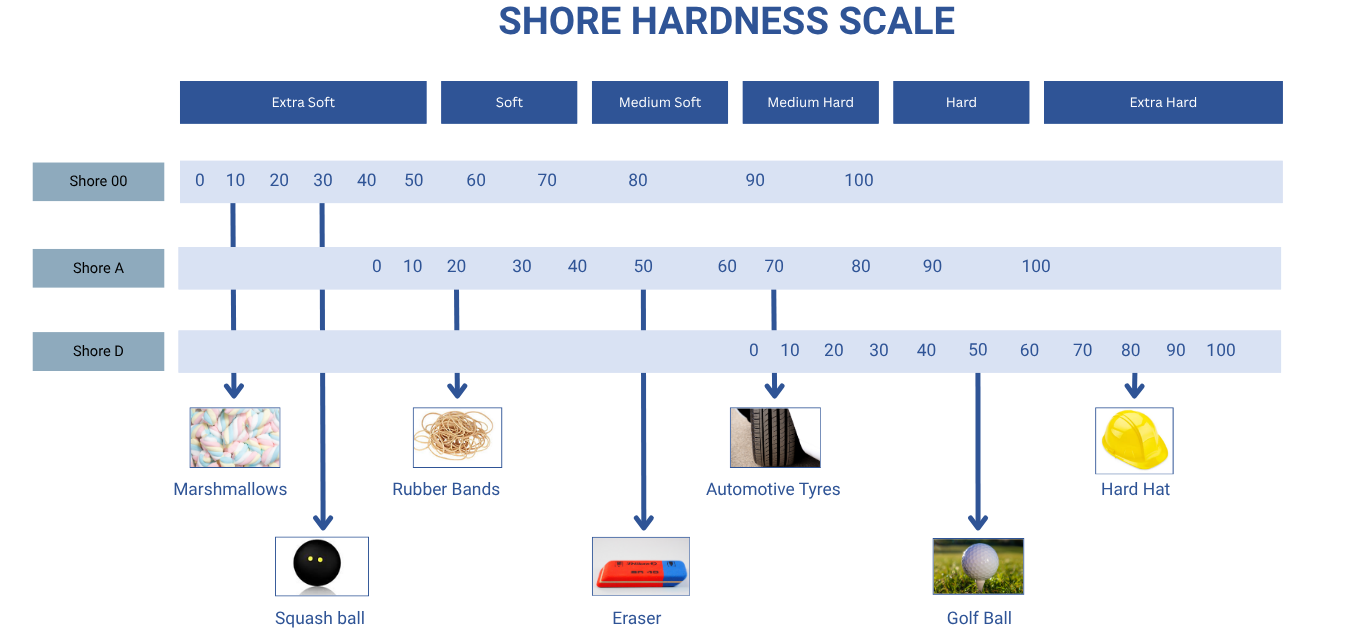 as 50 ShA silicone, generally compress more easily and may exhibit higher compression set values. Harder materials, such as 75 ShA FKM, tend to resist deformation more effectively and often provide improved compression set performance.
Selecting the correct hardness helps balance sealing effectiveness, installation requirements, and long-term durability.
O-ring Size
Correct O-ring sizing plays an important role in maintaining seal integrity and reducing compression set. The cross-sectional thickness and gland dimensions determine the amount of squeeze applied during installation.
Thicker O-rings may experience greater compression, increasing the risk of permanent deformation. Conversely, O-rings that are too thin may not generate sufficient sealing force. Oversized O-rings can also experience excessive installation stress, which may affect service life.
Compression Set Performance of Common O-rings Materials
Different elastomer compounds exhibit varying levels of compression set resistance. While application requirements such as temperature, chemical compatibility, and hardness should always be considered, the table below provides a general comparison of common O-ring materials and their typical compression set performance.
| Material | Compression Set Resistance | Temperature Resistance | Typical Applications |
|---|---|---|---|
| Silicone (VMQ) | Fair | Excellent | Food processing, medical devices, high-temperature environments |
| NBR (Nitrile) | Good | Good | Hydraulic systems, fuel systems, oil sealing applications |
| EPDM | Very Good | Excellent | Water systems, steam applications, outdoor environments |
| FKM (Viton®) | Excellent | Excellent | Chemical processing, fuels, high-temperature sealing applications |
Why is Compression Set Important When Selecting an O-ring?
O-rings function by maintaining continuous contact between the sealing surfaces and the gland. To achieve this, the elastomer is compressed during installation, creating the sealing force required to prevent leakage.
Over time, heat, pressure, and chemical exposure can alter the polymer structure of the material. As elasticity decreases, the O-ring becomes less capable of returning to its original shape, reducing the sealing force available within the assembly.
For this reason, compression set should be considered alongside chemical compatibility, temperature resistance, and hardness during material selection. Choosing an elastomer with good compression set resistance helps prevent premature seal failure, reduce maintenance costs, and improve long-term system reliability.
In critical applications such as hydraulic systems, chemical processing equipment, and industrial machinery, compression set is often one of the most important indicators of long-term sealing performance.
Need Help Call +44 (0)1420 474123 or e-mail us. We're here to help you find the perfect solution for reliable, long-lasting sealing.