
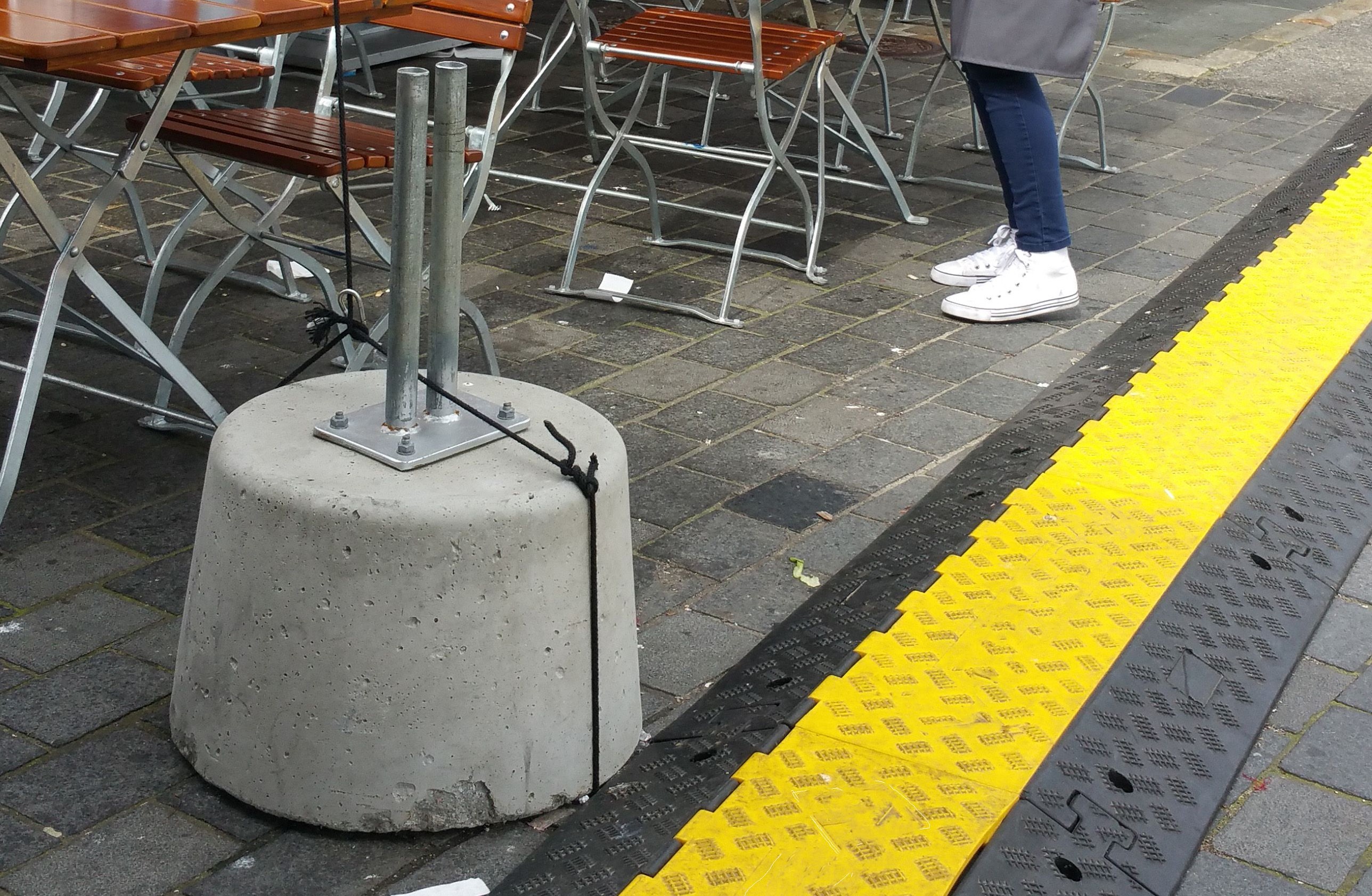
Protecting people should always be the first priority, whether in a warehouse, on a construction site or at a temporary event. Exposed cables and hoses can quickly become trip hazards, putting employees, contractors and members of the public at risk of injury. In areas where vehicles operate, unprotected cables can also become damaged, leading to equipment failure, costly downtime and additional safety concerns.
Choosing the right cable or hose protector is therefore about far more than protecting cables, it is about creating safer environments, reducing risk and ensuring the smooth operation on your site.
Why Are Cable and Hose Protectors Important?
Slips, trips and falls remain one of the most common causes of workplace injuries across the UK. Cables and hoses running across walkways, access routes and vehicle routes present a significant risk if they are not properly managed.
A suitable cable protector can help: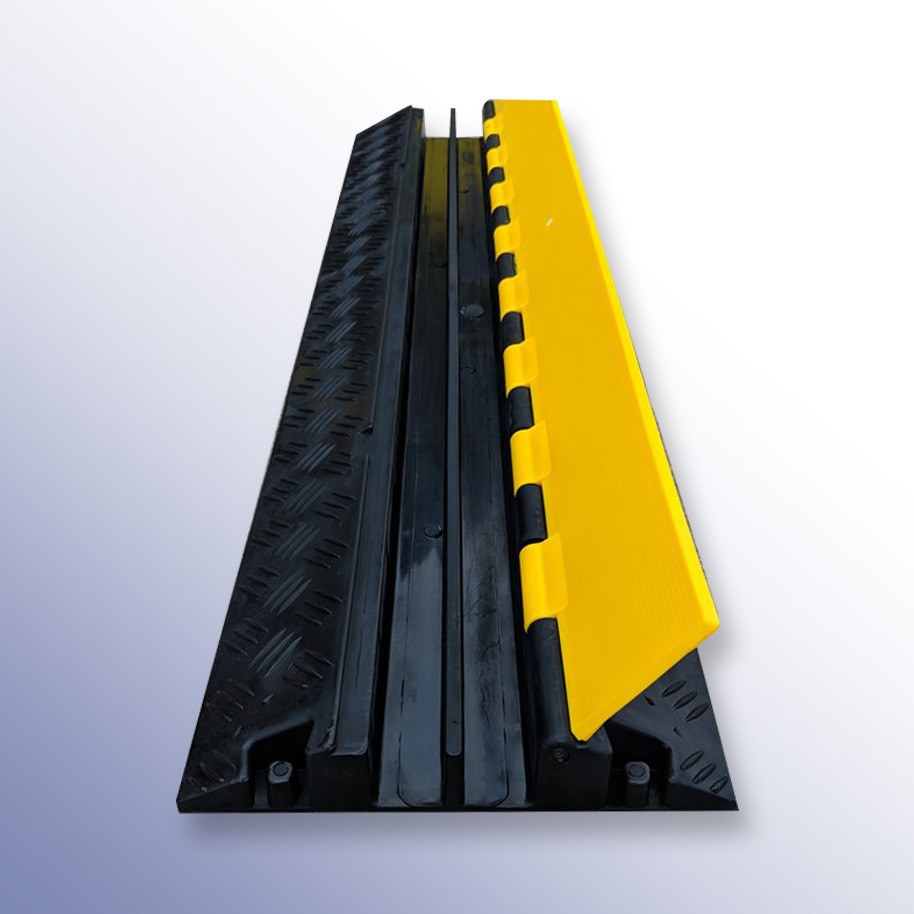
- Protect people from slip and trip hazards
- Protect power cables and hoses from damage
- Improve site safety and housekeeping
- Maintain safe access routes
- Reduce downtime and costly repairs
- Ensure compliance with health and safety requirements
For temporary installations such as festivals, exhibitions, sporting events and outdoor events, cable protectors also help create safe public spaces where large numbers of people may be moving around unfamiliar environments.
Understanding Your Legal Responsibilities
Employers and site managers have a legal duty to assess and control workplace risks.
Relevant legislation and guidance may include:
- Health and Safety at Work etc. Act 1974
- Management of Health and Safety at Work Regulations 1999
- Construction (Design and Management) Regulations 2015
- HSE Guidance INDG225 – Preventing Slips and Trips at Work
- HSE Guidance HSG150 – Health and Safety in Construction
- Temporary event guidance from the Event Safety Alliance and local authority licensing requirements
Failure to adequately manage cables and hoses can result in accidents, enforcement action, claims, project delays and reputational damage.
Step 1: Consider the Environment
The first question to ask is where the cable protector will be used.
| Environment | Typical Applications | Key Requirements |
|---|---|---|
| Indoor | Offices, warehouses, schools, exhibition halls and retail environments | Low-profile covers that minimise trip hazards and allow safe pedestrian access |
| Outdoor | Construction sites, infrastructure projects, festivals and public events | Weather resistance, durability, UV protection and suitability for uneven ground. Must withstand rain, mud, temperature fluctuations and, where necessary, heavy vehicle traffic. |
Step 2: Understand the Traffic Using the Protector
One of the most important factors when choosing a cable protector is determining what will pass over it. Selecting an underspecified protector can lead to structural failure, resulting in the load being directly applied to the live cables or pressurised hoses and creating serious safety risks.
| Traffic Type | Typical Applications | Recommended Solution | Typical Load Requirement |
|---|---|---|---|
| Pedestrian Traffic | Offices, exhibitions, festivals and public events | Foot Traffic Cable Cover | Pedestrians and light trolleys |
| Light Vehicles | Cars, service vehicles and delivery vans | MCP Multi Cable Protector | Light commercial traffic |
| Heavy Commercial Traffic | Forklifts, warehouse vehicles and plant machinery | Polyurethane MPC Cable Protector | Up to 40 tonnes depending on model |
| Heavy Goods Vehicles | Construction sites, utilities and infrastructure projects | HGV Outdoor Cable Protector | Up to 80 tonnes depending on model |
It is always recommended to choose a cable protector with a load rating that exceeds your expected traffic requirements. Underestimating vehicle loads is one of the most common causes of cable protector failure.
Step 3: Consider the Duration of Use.
The duration of the installation often determines the most suitable type of cable protector.
| Installation Type | Typical Applications | Recommended Features |
|---|---|---|
| Temporary Installations | Festivals, concerts, sporting events, exhibitions, film productions and emergency response situations | Quick deployment, modular design, high visibility and easy repositioning |
| Long-Term Installations | Warehouses, manufacturing facilities, loading bays and utility installations | Heavy-duty construction, high load capacity and long-term durability |
Temporary cable management is particularly important at events where large numbers of visitors may be walking across power cables, lighting cables, data lines and water hoses. In these environments, cable protectors help maintain safe access routes while protecting essential services.
Step 4: Determine the Number and Size of Cables or Hoses
Not all hoses carry the same materials, and the consequences of damage can vary significantly. When selecting a hose protector, consider both the hose itself and the medium being transported.
| Medium | Potential Risk if Damaged | Additional Considerations |
|---|---|---|
| Chilled water or glycol | Slips, loss of cooling, equipment damage | Consider heavier-duty protection and leak response procedures |
| Compressed air | Hose whip, loss of service | Protect against impact and crushing |
| Hydraulic oil | Slips and environmental contamination | Robust protection and spill management |
| Chemicals | Injury and environmental risks | Review COSHH requirements and risk assessments |
| Hot water or steam | Burns and scalding | Protect against rupture and accidental contact |
For example, temporary chillers used during shutdowns or emergency cooling projects often require both power cables and glycol hoses to cross vehicle routes. In these situations, selecting a protector solely based on traffic loading may not be sufficient. The potential consequences of a damaged hose should also influence the level of protection chosen.
Step 5: Consider Visibility and Access Route Clearance
Cable protectors should improve safety, not create new hazards.
High-visibility cable ramps are often the preferred choice in: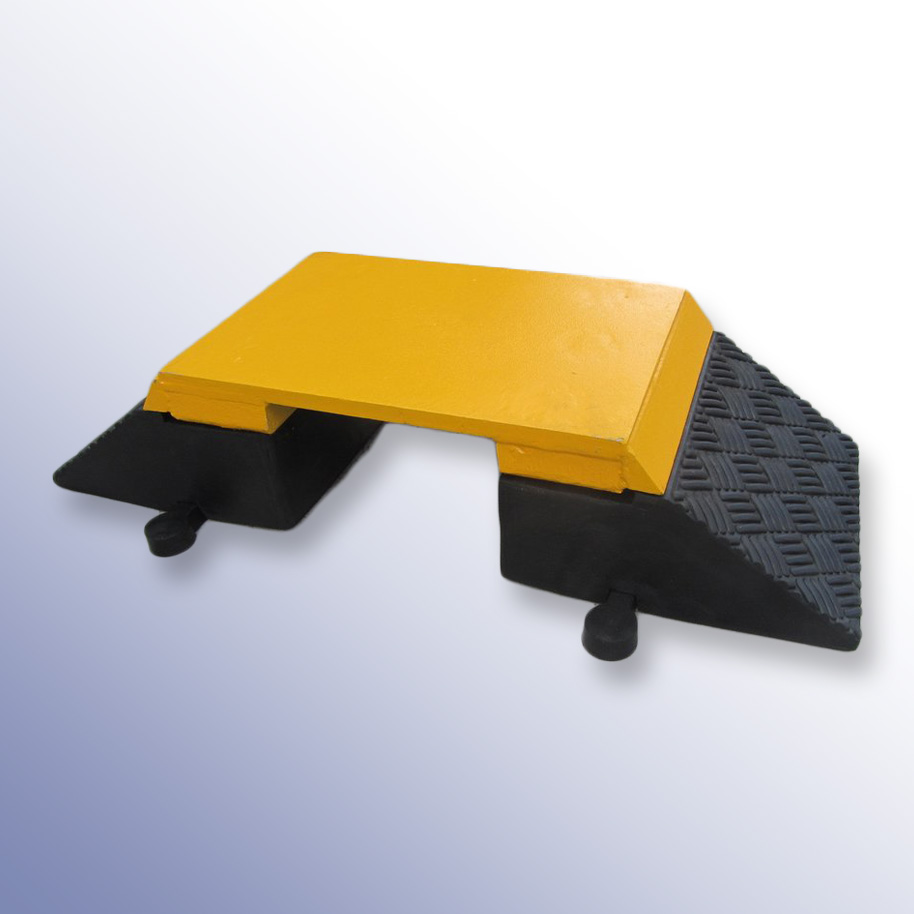
- Warehouses
- Public spaces
- Event venues
- Construction sites
- Emergency access routes
The profile and positioning of the protector should also allow safe movement of pedestrians, wheelchairs, trolleys and vehicles wherever possible.
Common Selection Mistakes to Avoid
Some of the most common issues we encounter include:
- Underestimating vehicle loads
- Choosing channels that are too small
- Using indoor products outdoors
- Failing to consider installation duration
- Selecting products with insufficient visibility
Taking a few extra minutes to assess the environment and traffic requirements can significantly reduce the risk of accidents and premature product failure.
Why Choose Polymax for Cable and Site Safety Solutions?
At Polymax, we have experience helping customers across numerous industries, including manufacturing, warehousing, construction, utilities and live events.
Whether you require a simple pedestrian cable cover for an exhibition stand or an 80-tonne-rated cable protector for a heavy-duty construction site, our team can help you identify the most suitable solution for your application.
Many of our cable protectors and site safety products are available from stock and can be delivered quickly to help keep your project running safely and efficiently.
Need Help Choosing the Right Cable Protector?
By considering: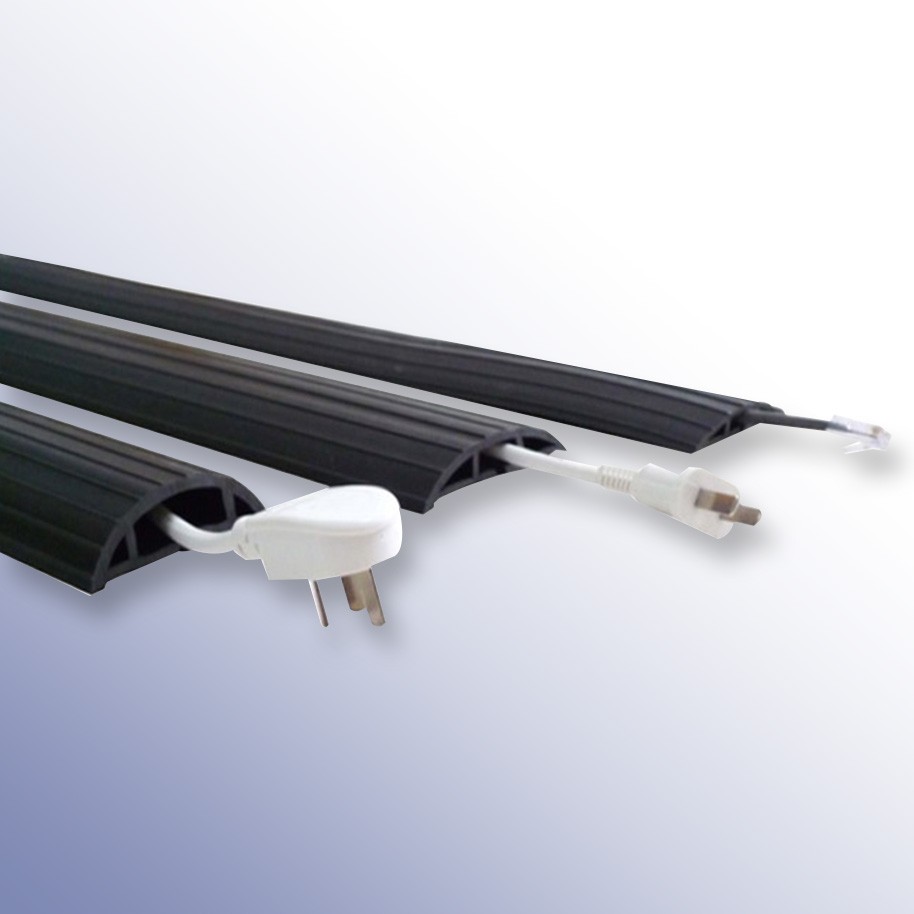
- The environment
- Traffic type and load requirements
- Installation duration
- Cable and hose size and capacity
- Visibility and access requirements
You can significantly improve site safety, protect valuable equipment and ensure compliance with health and safety obligations.
If you're unsure which solution is right for your application, our team is always happy to help, contact us on +44(0) 1420 474 123 or E-mail us here.