
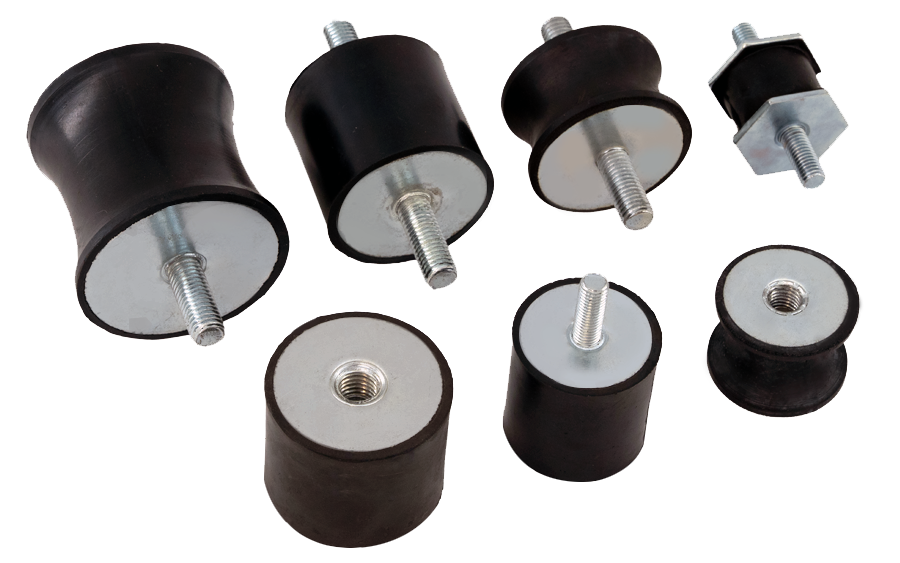
Anti vibration mounts, also known as AV mounts or vibration isolators, are rubber or elastomeric components used to absorb and dampen mechanical vibrations and shocks. They help prevent damage, reduce noise, and improve operator comfort in various mechanical systems. Whether you are working in industrial automation, HVAC systems, automotive applications, or marine environments, choosing the correct anti vibration mount can significantly extend the lifespan of your equipment and enhance overall performance.
Before beginning the selection process, it is important to clearly understand the specific objectives you want to achieve with the anti vibration mount, whether that’s reducing noise, protecting sensitive equipment, minimising shock loads, or improving operator comfort. This understanding will guide your choices and help you specify the most effective mount for your application.
To ensure optimum performance, it’s essential to know the criteria for specifying and selecting anti vibration mounts, how often they should be inspected, and when they should be replaced.
Criteria for Specifying Anti Vibration Mounts
When selecting anti vibration mounts, consider the following criteria carefully:
1. Load Requirements
Each mount is designed to support a specific static and dynamic load. Overloading can cause premature failure, while under-loading may reduce isolation effectiveness. Consider the following:
- Determine the equipment weight.
- Distribute weight evenly across mounts.
- Factor in dynamic forces (e.g., from motors or compressors).
2. Vibration Frequency
Vibration frequency is one of the most important factors when selecting an anti vibration mount. It refers to how quickly a machine vibrates and is typically measured in Hertz (Hz), or cycles per second.
Every piece of rotating equipment generates vibration at a specific frequency based on its operating speed. For example: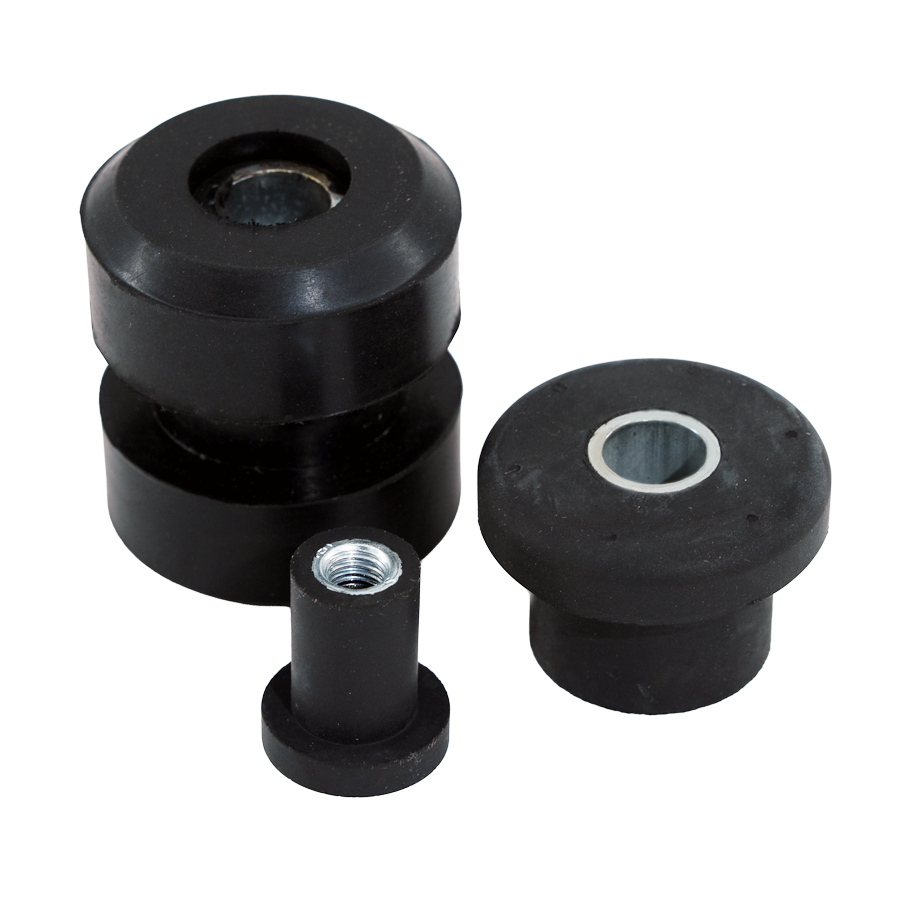
- A motor running at 1,800 RPM produces a vibration frequency of 30 Hz.
- A compressor operating at 3,600 RPM produces a vibration frequency of 60 Hz.
To convert RPM to Hertz, use the following formula:
Frequency (Hz) = RPM ÷ 60
For anti vibration mounts to isolate vibration effectively, their natural frequency must be significantly lower than the vibration frequency of the equipment. This creates an isolation zone where vibration energy is absorbed rather than transmitted to surrounding structures.
If the equipment's vibration frequency is too close to the mount's natural frequency, resonance can occur. Resonance amplifies vibration, increasing noise levels, accelerating component wear, and potentially causing equipment damage.
As a general rule, the operating vibration frequency should be at least 1.4 to 2 times greater than the mount's natural frequency to achieve effective vibration isolation.
When selecting a mount, also consider the relationship between load and stiffness:
- Stiffer mounts have a higher natural frequency and provide less vibration isolation.
- Softer mounts generally offer better vibration isolation but may allow greater movement.
- Heavier loads compress mounts further, reducing their natural frequency and improving low-frequency isolation.
For optimum performance, always select a mount that supports the equipment load while maintaining a natural frequency well below the machine's operating frequency.
2.1 Understanding Static Deflection
Static deflection is the amount a mount compresses under a given static load. It is one of the most critical parameters for determining the natural frequency of a mount and, therefore, its vibration isolation performance. In general, the greater the static deflection, the lower the mount’s natural frequency and the better its ability to isolate low-frequency vibrations.
As a rule of thumb:
- Higher static deflection = better isolation, but may allow more movement or sway.
- Lower static deflection = stiffer support, better for high-frequency or precise applications.
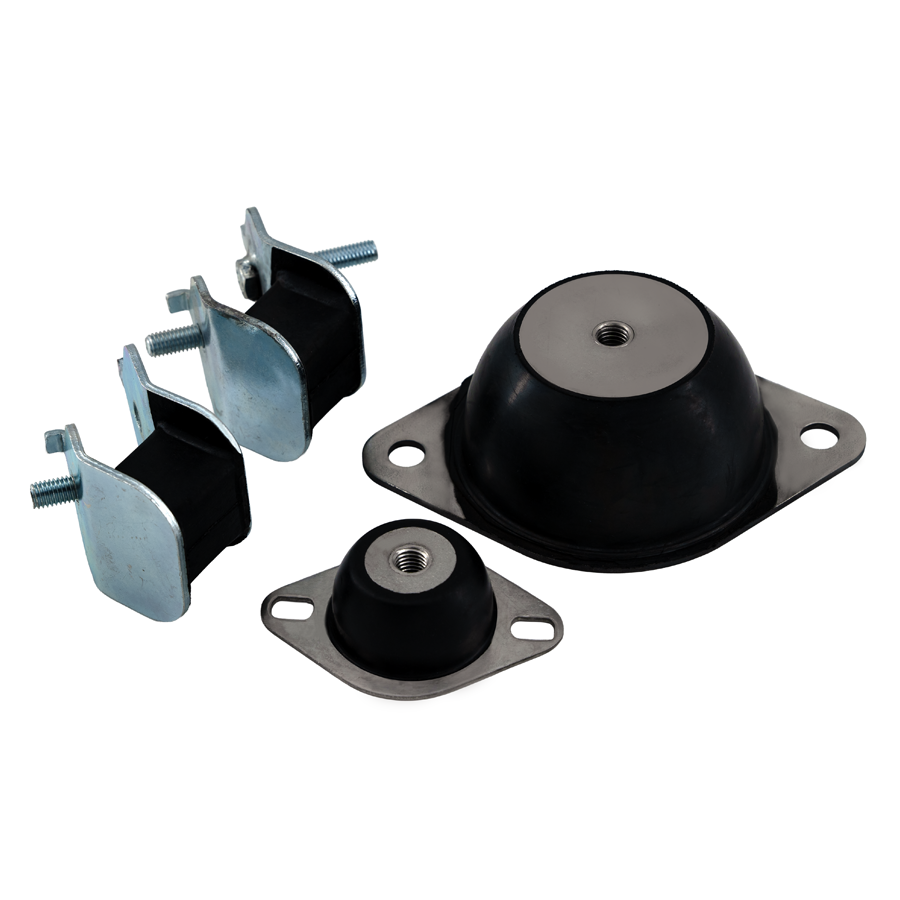 Polymax provide static deflection data (e.g., mm per kg or inches per pound), which helps you compare mounts and ensure their deflection fits your equipment’s isolation and stability requirements.
When selecting a mount:
- Estimate the deflection based on your equipment’s weight.
- Check that the deflection is within the optimal operating range of the mount.
- Avoid over-compressing (which can bottom out the mount) or under-loading (which reduces vibration damping).
3. Environmental Conditions
The working environment can affect the longevity and performance of mounts. Consider:
- Temperature ranges.
- Exposure to oil, chemicals, UV, or moisture.
- Outdoor vs. indoor use.
Select materials like neoprene, EPDM, or natural rubber depending on these factors.
4. Mount Orientation and Movement
Mount orientation refers to the direction and type of forces the anti vibration mount must handle typically axial (vertical), radial (horizontal), or multi-directional loads. It is essential to choose a mount that is specifically designed to withstand the dominant direction of force in your application.
| Mount Type | Typical Features / Use | Axial Loads (Vertical) | Radial Loads (Horizontal) | Multi-Directional Loads | Typical Applications |
|---|---|---|---|---|---|
| Bobbin Mounts | Compact, simple, cost-effective | ★★★★★ | ★★☆☆☆ | ★☆☆☆☆ | Motors, pumps, fans, light machinery |
| Anti-Vibration Pads | Levelling, shock isolation, low profile | ★★★☆☆ | ★★☆☆☆ | ★★☆☆☆ | HVAC units, enclosures, cabinets |
| Shear Compression Mounts | High load capacity, excellent stability | ★★★★☆ | ★★★★☆ | ★★★☆☆ | Compressors, engines, industrial machinery |
| Machinery Feet | Levelling and vibration isolation | ★★★★☆ | ★★★☆☆ | ★★☆☆☆ | Machine tools, presses, heavy equipment |
| High Deflection Mounts | Low-frequency vibration isolation | ★★★☆☆ | ★★★☆☆ | ★★★★☆ | Sensitive equipment, test rigs |
| Buffers and Stops | Impact absorption, end-of-travel protection | ★★★★★ | ★☆☆☆☆ | ★☆☆☆☆ | Doors, conveyors, cranes |
| Generator Mounts | Designed for gensets and power units | ★★★★☆ | ★★★☆☆ | ★★★☆☆ | Generators, alternators |
| Cylindrical Bushes | Simple, durable radial compliance | ★☆☆☆☆ | ★★★★☆ | ★★☆☆☆ | Linkages, pivots, control arms |
| Centre Bonded Bush | Metal bonded, high shear strength | ★★★☆☆ | ★★★★☆ | ★★★☆☆ | Automotive and industrial linkages |
| Vehicle Suspension Mounts | Road shock and vibration isolation | ★★★☆☆ | ★★★☆☆ | ★★★★☆ | Cars, trucks, off-road vehicles |
| Marine Mounts | Corrosion resistant, high isolation | ★★★★☆ | ★★★★☆ | ★★★★★ | Marine engines, gearboxes, vessels |
| Sandwich Mounts | Strong, stable, good shear resistance | ★★★★☆ | ★★★★★ | ★★★☆☆ | HVAC, pumps, compressors |
| Cone Transit Mounts | Shock absorption, transport protection | ★★★★☆ | ★★★★☆ | ★★★★★ | Marine, military, rail, generators |
Incorrect orientation can lead to premature failure, poor vibration damping, or even damage to connected machinery, so always match the mount’s design to the load direction for optimal performance and longevity.
Consider the direction of forces:
- Axial (vertical loads)
- Radial (horizontal loads)
- Multi-directional motion
5. Durability and Life Expectancy
Choose mounts rated for long-term performance and resistance to fatigue.
How Often Should Anti Vibration Mounts Be Checked?
To ensure a long operating life and maintain optimal vibration isolation, regular inspections are critical. We recommend the following inspection frequencies: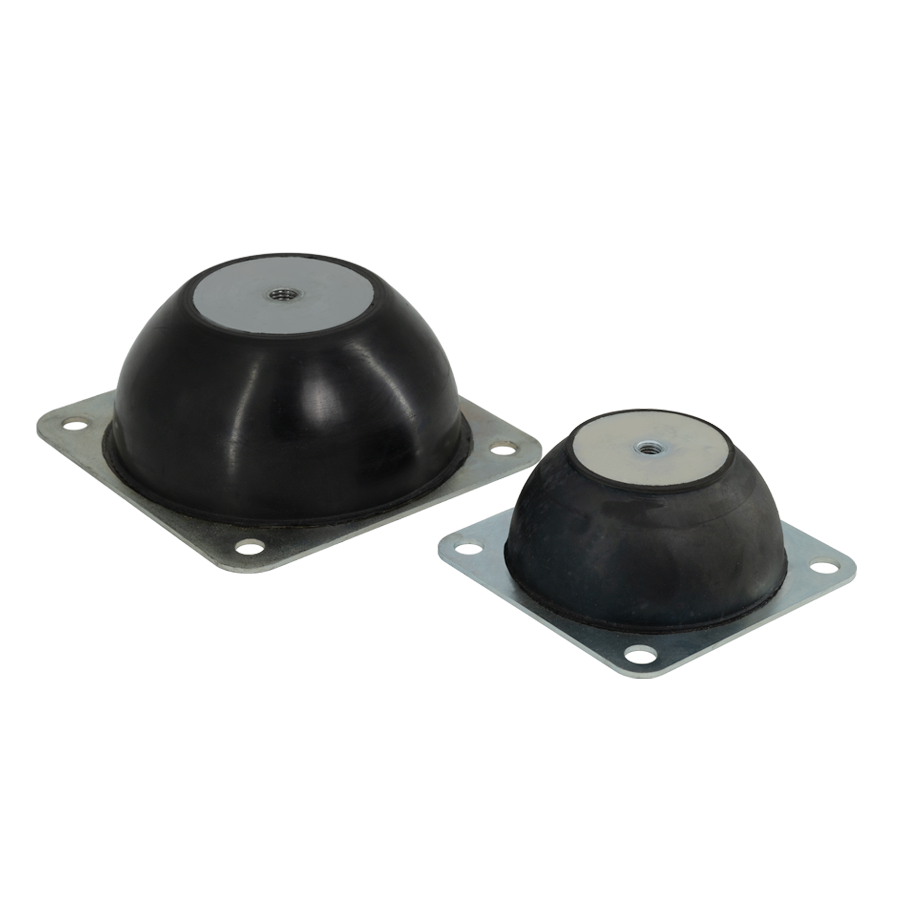
- Every 6–12 months for standard industrial applications.
- Quarterly inspections in high-vibration or mission-critical environments.
- After any major equipment movement, repair, or shock event.
What to check during inspections:
- Cracks, splits, or hardening in rubber components.
- Loosening of mounts or hardware.
- Excessive compression or deformation.
- Rust or corrosion on metal parts.
When Should Anti Vibration Mounts Be Replaced?
Even the best anti vibration mounts degrade over time. Common signs that mounts need to be replaced include:
- Loss of vibration isolation.
- Increased noise or rattling.
- Visible wear or deterioration.
- Mounts have reached their expected service life (usually 3–7 years, depending on application and material).
Always replace mounts in sets to maintain balance and even load distribution.
Selecting the correct anti vibration mount is essential for reducing noise, controlling vibration, protecting equipment, and extending service life. By carefully considering load requirements, vibration frequency, static deflection, environmental conditions, and mounting orientation, you can ensure reliable performance and effective vibration isolation.
Regular inspection and maintenance are equally important. Monitoring mounts for signs of wear, deformation, corrosion, or loss of isolation performance can help prevent costly downtime and unexpected equipment failures.
For expert advice and product recommendations tailored to your needs, contact our team of experts on +44 (0) 1420 474 123 or E-mail us.