For UK enquiries please visit polymax.co.uk or contact us on 01420 474123 | Email [email protected]
+44 (0) 1420 474123
£ GBP
£ British Pound Sterling (GBP)
Change currency:
  • € Euro (EUR)
  • Rs Indian Rupee (INR)
  • zł Polish Zloty (PLN)
  • $ US Dollar (USD)

[email protected]
You have no items in your shopping cart.
0
Cart

Monthly Archives: February 2026

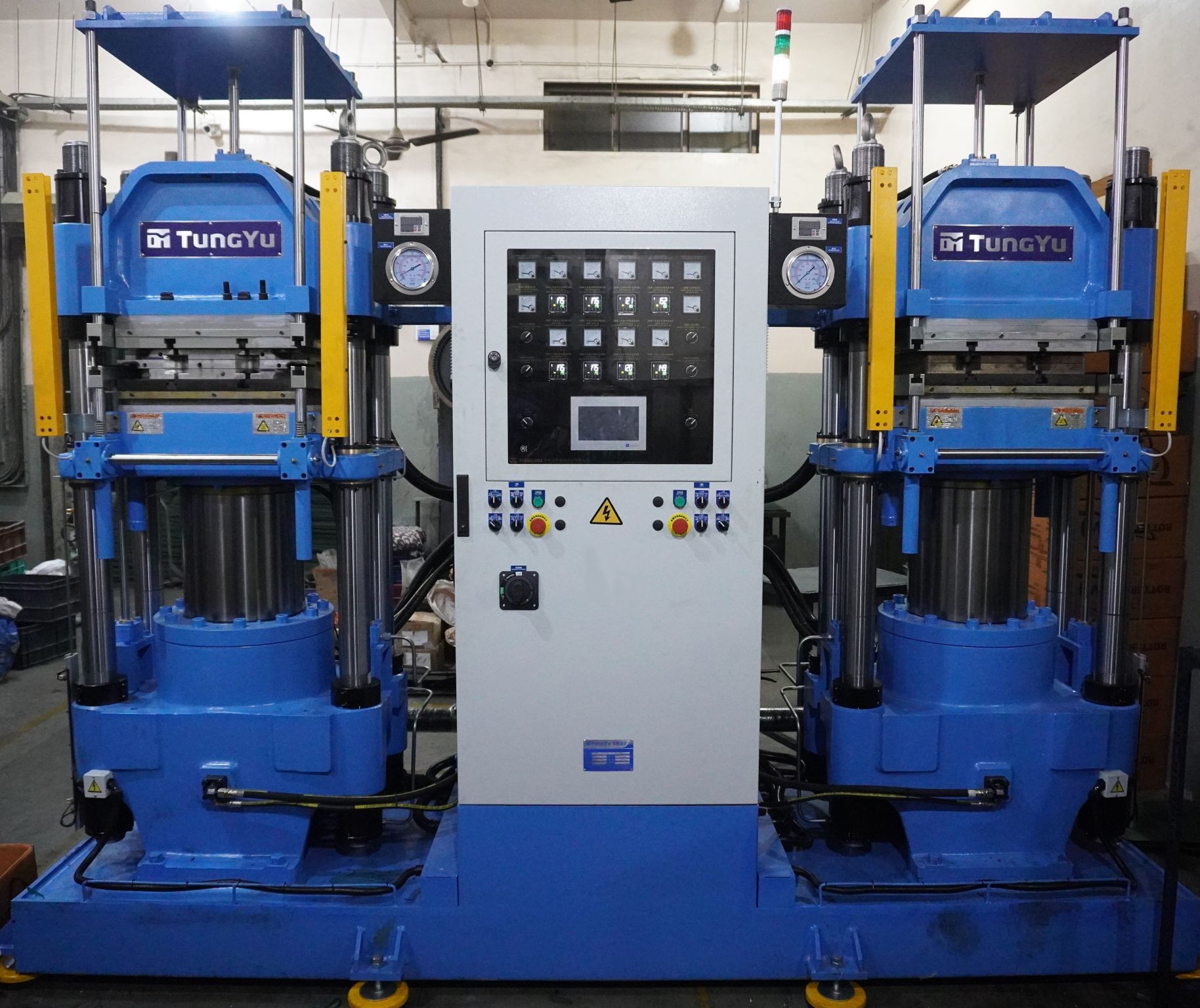
  • Polymax Invests in Advanced Rubber Moulding Technology


    At Polymax, we are committed to continuous improvement and delivering greater value to our customers. Our latest investment in advanced rubber moulding machines is another step forward, enhancing precision, expanding capability, and increasing production efficiency across our operations, and expanding our capacity to provide custom rubber moulding solutions.

    What This Means for You

    Higher Accuracy & Tighter Tolerances

    Equipped with advanced control systems and integrated sensor technology, our new machines provide exceptional process control and repeatability. The result is consistent, high-quality components manufactured exactly to specification.

    Expanded Manufacturing Capabilities

    We can now accommodate a wider range of mould configurations, including 2-plate, 3-plate, and 4-plate tooling. This expanded flexibility allows us to deliver more complex geometries and highly customised rubber components, tailored to your exact requirements.

    Improved Efficiency & Reliable Lead Times

    Enhanced machine integration and reduced manual handling streamline our production processes. This not only improves tool longevity but also increases output efficiency, helping us deliver dependable lead times you can plan around.

    Safer, Smarter Production

    Upgraded safety features and improved ergonomics create a safer, more efficient working environment for our team. By reducing risk and enhancing workflow, we ensure consistent performance and sustained quality at every stage of production.

    To find out more about our custom moulding capabilities, contact our team of experts on:

    + 44 (0)1420 474 123 or [email protected]

  • WRAS Approval Scheme for Drinking Water: Standards, Materials, and Global Comparisons

    Ensuring the Safety and Compliance of Materials for Potable Water

    Ensuring the safety and compliance of materials in contact with drinking (potable) water is a critical responsibility for engineers, manufacturers, and contractors in the UK. The Water Regulations Advisory Scheme (WRAS) provides a robust framework to certify materials for potable water use, verifying that products will not compromise water quality, public health, or system performance.

    Is WRAS Approval a Legal Requirement?

    While WRAS approval itself is a voluntary certification and not a legal requirement, compliance with the Water Supply (Water Fittings) Regulations (or Scottish Byelaws) is mandatory by law.

    In the context of O-rings, this means:

    • The Legal Risk: Installing a non-compliant O-ring, such as a generic automotive seal, that leaches chemicals or promotes bacterial growth is a criminal offense.
    • The Performance Gap: In the UK, compliance is viewed through two lenses: Safety (BS 6920/WRAS) and Reliability (EN 681-1). While WRAS ensures the water stays pure, EN 681-1 (the standard for elastomeric seals) ensures the O-ring is physically strong enough to prevent leaks and structural failure.
    • The Practical Solution: Because individual homeowners and plumbers cannot easily perform laboratory tests on a single rubber seal, using WRAS-approved O-rings is the only practical way to guarantee that a component meets the required legal standards for both safety and mechanical integrity.

    The regulations state that every water fitting must be of "an appropriate quality and standard." While other certifications (like KIWA or NSF) are also legally valid, WRAS remains the most recognised "stamp of approval" in the UK to ensure your plumbing stays on the right side of the law.

    What WRAS Approval Ensures

    WRAS certification confirms that materials and components in contact with potable water:

    • Do not leach harmful substances into water.
    • Maintain taste, odour, and clarity.
    • Prevent microbial growth (Standardised via EN 16421).
    • Retain structural integrity under normal service conditions (Standardised via EN 681).

    Materials undergo rigorous testing, including:

    • Chemical extraction testing: Ensures no harmful compounds migrate into water.
    • Organoleptic assessment: Evaluates taste and odour impacts.
    • Microbial growth testing (EN 16421 / BS 6920-2.6): Ensures the material does not provide a "food source" for bacteria. EN 16421 tests the Enhancement of Microbial Growth (EMG), preventing biofilms that could harbor pathogens like Legionella.
    • Mechanical performance (EN 681-1): Verifies hardness, tensile strength, and "compression set" to ensure the seal doesn't degrade over time.

    Only materials that meet all criteria are approved, providing confidence in long-term water safety for engineers, contractors, and water authorities.

    Scope of WRAS-Certified Products

    WRAS certification is relevant to non-metallic components in contact with potable water, including:

    Checking WRAS Approval

    • Verify that a product has a current WRAS approval mark.
    • Approvals are valid for 5 years and must be re-evaluated after expiration.
    • Formulations can change over time; only verified approvals ensure regulatory compliance.
    • Manufacturers display the WRAS Certification Mark on packaging or websites.
    • Check out the official Polymax WRAS listings on the WRAS website.

    Key point: WRAS approval covers individual products or materials, not an entire manufacturer’s product range.

    WRAS vs Global Potable Water Standards

    Region / Country Approval Scheme Primary Focus Comparable to WRAS?
    United Kingdom WRAS UK Water Fittings Regulations Yes
    Europe EN 16421 / EN 681 Microbial Growth / Mechanical Seals Technical foundation
    United States NSF / ANSI 61 Drinking water system safety Yes
    Germany KTW-BWGL / DVGW Non-metallic materials (inc. W270) Yes
    France ACS Sanitary compliance Yes
    Australia & NZ WaterMark Plumbing product safety Yes

    Elastomer and Non-Elastomer Material Comparison

    Selecting the correct elastomer or material is critical for WRAS compliance. Only chemically inert, water-stable, and microbiologically safe materials should be used in drinking water systems.

    Material WRAS Approved Material WRAS Approved Water Temp Material Operating Temp
    Silicone (VMQ) Yes (Compound specific) Up to 85°C -60°C to +200°C
    EPDM Yes (Compound specific) Up to 85°C -40°C to +120°C
    Nitrile (NBR) Yes (Compound specific) Up to 85°C -30°C to +100°C
    FKM Yes (Compound specific) Up to 85°C -15°C to +200°C

    WRAS at a Glance

    • Chemical safety (via BS 6920)
    • Microbiological safety (via EN 16421)
    • Mechanical reliability (via EN 681)
    • Regulatory compliance (Water Supply Regulations 1999)

    For UK potable water applications, engineers and specifiers should prioritise WRAS-approved Silicone (VMQ) and EPDM, as these consistently meet stringent testing requirements.

    Tip: Always verify material WRAS status and consult technical datasheets to ensure safe, compliant, and long-lasting potable water systems.

    Get Expert Advice

    Our team of experts can help you choose the right materials for drinking water applications, ensuring WRAS compliance and UK regulatory adherence.

    Contact us: +44 (0) 1420 474 123 | Email: [email protected]
  • Polymax offer EN45545 Compliant Rubber Compounds

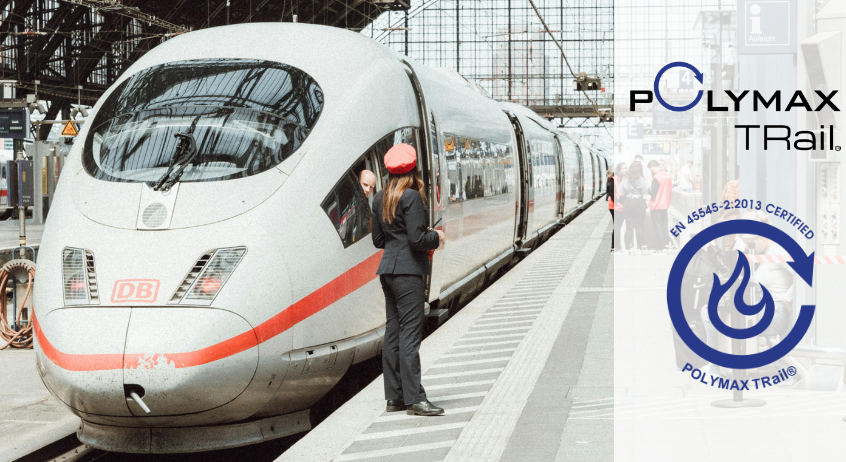
    When it comes to passenger safety in public transport, material choice is critical. Around half of all fire-related casualties are not linked to flames, but to the inhalation of smoke and toxic gases. For manufacturers and operators in the rail sector, the challenge is clear: select materials that limit ignition, reduce flame spread, and minimise smoke and toxicity.

    Polymax is bringing the latest in material innovation with the introduction of Polymax TRail® EN45545-certified rubber compounds. These compounds have been developed by Polymax’s in-house chemists and independently certified by a COFRAC accredited laboratory, ensuring compliance with the highest international safety standards.

    Why EN45545 Matters

    The EN45545-2:2013+A1:2016 standard governs the fire behaviour of materials used in rail and transport applications, classifying them by hazard level depending on their use inside or outside carriages. The goal is simple but vital: to restrict fire development and provide passengers and staff valuable time to reach safety.

    The approved compounds meet the most demanding of these classifications:

    • Polymax TRail® R10 HL3 – SE 75
    • Polymax TRail® R22/23 HL2 – RE 75

    Tested for Safety, Proven in Performance

    The compounds have undergone rigorous testing across key fire performance measures:

    • ISO 9239-1 Critical Flux Test – Demonstrates resistance to flame spread; Polymax compounds showed excellent performance in limiting flame propagation.
    • ISO 5660-1 Rate of Heat Release – Using a cone calorimeter, the compounds achieved a low Maximum Average Rate of Heat Emission (MARHE), indicating slower heat release and reduced fire intensity.
    • ISO 5659-2 Smoke Density and Toxicity – Tests confirmed low smoke generation with significantly reduced emission of toxic gases, a major factor in improving survivability during a fire.
    • ISO 4589-2 Oxygen Index – Both compounds required a high minimum oxygen concentration to sustain combustion, showing strong resistance to ignition in real-world scenarios.

    These results place Polymax EN45545 compounds firmly among the most reliable solutions for safety-critical rail applications, e.g. in the form of extrusions, mouldings and hoses.

    To find out more contact us 

  • Polymax Awarded WRAS Approval for EPDM O-Rings

    Polymax EPDM O-Rings WRAS Certified for Safe Use in Drinking Water Applications

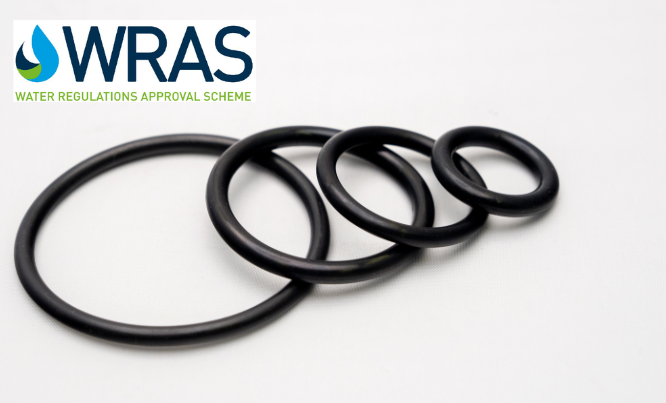
    We are pleased to announce that Polymax EPDM O-rings have officially received WRAS (Water Regulations Advisory Scheme) approval, a mark of quality that guarantees compliance with UK water regulations. With Polymax WRAS approved EPDM O-rings, customers can have complete confidence that they are using high-quality, reliable products that meet stringent regulatory standards and perform consistently in every application.  Check out the official Polymax WRAS Listing on the WRAS Website

    Our WRAS approved EPDM O-rings offer: Suitability for Drinking Water Systems: The primary benefit is that WRAS approval certifies that a non-metallic product is suitable for contact with drinking water, in compliance with standard BS 6920-1 / 2000. This makes them ideal for use in drinking water applications, such as water supply pipes and plumbing fixtures.

    Compliance with UK Regulations: WRAS is the standard used in Great Britain for this purpose. Using WRAS-approved components helps ensure compliance with UK water regulations.

    Assured Water Quality: The testing process for WRAS approval ensures that the elastomer materials do not impair the quality of the water they come into contact with. This includes verifying that the material does not: Promote the growth of bacteria Affect the water's colour or appearance Impart any unpleasant taste to the water This milestone reinforces Polymax’s commitment to bringing valuable solutions to the market, in particular where compliance and safety are paramount.

4 Item(s)

Cookie Notice.
This websites use cookies. By continuing to browse the site you are agreeing to our use of cookies.